



A commercial lease agreement is the legally binding contract between a property owner and a business tenant that governs every aspect of renting commercial property. Getting it right from day one saves money, prevents future disputes, and protects landlord and tenant alike. This guide breaks down what a commercial lease agreement must include under South African law, how the main lease types work, and where to get help.
What is a commercial lease agreement?
A commercial lease agreement is a written contract in which a landlord grants a tenant the right to occupy and use premises for business purposes. These premises can be shops, offices, warehouses, medical suites, restaurants, or any space used for income-producing activity rather than residential living. The agreement outlines the rights and obligations of landlords and tenants across every practical detail of the relationship.
Under South African contract law, a commercial lease agreement governs the arrangement through its own wording. Unlike residential leases, which fall under the Rental Housing Act, commercial tenancies rely on common law and the specific terms the parties negotiate. That means the text of the lease carries enormous weight in court.

A well structured commercial lease covers key clauses like rent, lease duration, maintenance duties, deposits, permitted use, dispute resolution, and termination and exit clauses. Poorly drafted commercial rental contracts have generated litigation costs in the range of R200,000 to R500,000 per dispute. A clear, balanced agreement is cheaper than a court case.
Rawson Property Group works with both landlords and tenants to negotiate and manage commercial leases that hold up over time.
How commercial leases differ from residential leases in South Africa
Residential leases in South Africa are regulated by the Rental Housing Act (Act 50 of 1999), which sets minimum protections for tenants regardless of the lease terms. Commercial leases operate differently. They rely on general contract principles and, for qualifying tenants, the Consumer Protection Act (CPA). In South Africa, commercial leases differ from residential leases mainly because they are governed by common law, leaving more room for negotiation and fewer built-in safety nets.
Practical differences include:
- Lease length: commercial leases are typically longer and more complex than residential leases; fixed terms of 3 to 10 years are standard, while residential leases usually run for 12 months.
- Cost structures: commercial leases allocate property expenses through gross lease, net lease, or triple net arrangements. Residential tenants rarely face these structures.
- Tenant protections: commercial leases involve fewer consumer protection regulations compared to residential leases and lack specific statutory tenant protections. Commercial leases allow for more negotiation than residential leases, but they also heavily favour landlords by default, making thorough review before signing non-negotiable.
- Statutory overlay: tenants with an asset value or turnover below R2 million may still enjoy CPA protections, even in a commercial context.
Courts treat both parties as commercially savvy. If you sign without reading, the lease still binds you.
Types of commercial leases (gross lease and other common structures)
"Commercial lease" is an umbrella term. What actually matters is how costs are split between the property owner and the tenant. There are three basic forms of commercial lease agreements used in South Africa, though terminology can vary between landlords and managing agents.
Gross lease: the tenant pays a single monthly rental, and the property owner covers most operating costs, including rates, building insurance, common-area cleaning, and security. Utilities like electricity or water may still be billed separately if the unit has its own meter. A gross lease includes a flat rental fee with all other costs covered by the landlord, making monthly expenditure accurately predictable for the tenant.
Net lease: the tenant pays a lower basic rental plus a pro-rata share of certain operating costs (common-area electricity, security levies, refuse removal, rates recovery). A lower basic rental applies because the tenant is picking up costs that a gross lease would bundle in. Tenants are often responsible for utility payments in net leases.
Triple net lease: common in larger retail parks and industrial estates, a triple net arrangement means the tenant pays rent plus almost all property-related expenses, including maintenance contributions, insurance, and municipal rates. Under a triple net lease, the property's operational costs shift almost entirely to the tenant.
Regardless of the label, the lease agreement must spell out exactly what is included and excluded. Utilities are not automatically included in commercial rent agreements; every cost line needs its own clause.
What properties count as "commercial property"?
A commercial lease agreement applies only to premises used for business or income-producing activities, not as someone's home. Concrete examples: high-street retail space in Cape Town CBD, office suites in Sandton, small industrial units in Midrand, restaurants, medical practices, and distribution warehouses.
Commercial property is distinct from residential premises and from agricultural land, which falls under different legislation. Mixed-use buildings (ground-floor shops with flats above) typically use separate lease agreements; commercial leases for the business spaces and residential leases for the apartments.
Key clauses every commercial lease agreement must include
A good commercial lease should clarify critical questions: who the parties are, what is being leased, for how long, at what cost, and what happens when something goes wrong. Because no standard form is imposed by law, each clause is open to negotiation. Here are the essentials:
- Parties: full legal names, ID or company registration numbers, and addresses for the landlord and tenant. If the tenant is a natural person or a company matters for CPA applicability and surety obligations.
- Property description: a commercial lease should include a detailed property description; the specific unit number, Erf or Portion number, floor area in m², parking bays, and any exclusive-use or common areas.
- Lease duration: start and end dates, whether fixed term or periodic, and any renewal options.
- Rent and escalation: base rental amount, payment frequency, escalation method, and VAT treatment.
- Deposits and sureties: amount, form (cash or bank guarantee), and conditions for use and refund.
- Permitted use: the type of business allowed and alignment with zoning.
- Operating costs: what the tenant pays beyond just the monthly rental, and how recoveries are calculated.
- Maintenance and repairs: who handles structural vs interior upkeep.
- Assignment and subletting: rules for transferring lease rights.
- Insurance and indemnity: building insurance (landlord), contents and liability (tenant).
- Dispute resolution: mediation, arbitration, or court, plus notice addresses.
- Termination: grounds for default, notice periods, penalties, and early exit rights.
Rawson Property Group helps landlords standardise strong, fair lease templates and helps tenants understand exactly what they are committing to. For a deeper look at common drafting errors, read about the 7 mistakes to avoid when signing a commercial lease.

Rent, escalation and other financial terms
The rental clause is usually the most negotiated part of a commercial lease agreement, and the part most likely to trigger disputes if left vague. The lease must specify the monthly rent and payment methods without ambiguity.
Base rent is commonly priced per square metre per month. A 200 m² shop at a net rate of R150/m² results in a base monthly rental of R30,000 before additional costs. Payment is typically monthly in advance by bank transfer.
Escalation locks in how rent increases over the lease period. Fixed annual escalation of 7 to 10% is the market norm in South African commercial leases. Rent increases may be fixed or linked to inflation via CPI. The difference between simple and compound escalation is material over a long fixed term; compound escalation on a R50,000 base rent at 8% produces a final-year rent roughly 36% higher than simple escalation would.
Operating costs and recoveries cover municipal rates, common-area utilities, security, refuse, and similar charges. The tenant pays these on top of base rent in net and triple net structures. Depending on the terms of the lease, tenants may also be responsible for additional expenses such as operating costs, parking levies and municipal rates. The lease must list each cost, the basis of apportionment (usually pro-rata floor area), and how often the landlord reconciles estimated versus actual figures.
Late payment interest, penalties, and any grace periods should all appear in writing. VAT at 15% applies to most commercial rentals; the lease should state whether the quoted figure is inclusive or exclusive.
Lease duration, lease period options and renewals
Every commercial lease must state the lease duration clearly: when it begins, when it ends, and whether it runs on a fixed term or rolls over month to month. Commercial lease durations can range from one to ten years, with most falling between three and ten years.
Fixed term leases of 3 to 5 years suit most office and retail tenants. Anchor tenants in shopping centres commonly sign 5 to 10 year fixed terms. Shorter rental periods (1 to 2 years) are common for start-ups testing a market. Fixed-term leases end on a specific date without renewal action unless the parties agree otherwise.
Periodic leases (month-to-month) often arise after a fixed term expires without a new agreement. Periodic leases renew automatically until terminated by either party, giving less certainty to both sides. Some leases include automatic renewal clauses to avoid surprises at expiry.
Renewal options let the tenant extend for an additional fixed term (e.g. "5 years plus a 5-year renewal option"). The lease should specify that the tenant must give written notice 6 to 9 months before expiry, and set out how the new rental will be determined. Vague wording like "to be discussed" leaves both sides exposed. Lease renewals and renegotiations should be clearly stated in agreements, with practical timelines and principles (such as market rental benchmarked against comparable properties).
A Rawson commercial broker can help align the lease period with your business plans; for instance, matching lease length to fit-out amortisation or a franchise term.
Deposits, guarantees and security for performance
Deposits and guarantees protect landlords against non-payment and property damage. They are standard in South African commercial leases.
Security deposits typically range from one to three months' rent (gross). The commercial lease deposit agreement should record the exact amount, where it is held, and whether interest accrues.
Bank guarantees work as an alternative for larger tenants: the bank undertakes to pay the landlord if the tenant defaults. Expiry dates and claim procedures must be explicit.
Personal sureties require directors or owners to guarantee the tenant's obligations in their personal capacity. This creates personal liability that survives the company's solvency. Seeking professional legal advice before signing a suretyship is not optional; it is essential.
The lease must spell out when and how the landlord may apply the deposit or call on a guarantee: unpaid rent, tenant damage, cleaning, or reinstatement at the end of the lease period. Tenants should calculate total financial exposure (monthly rent plus deposits, guarantees, and surety obligations) before committing, to avoid unexpected costs down the line.
Permitted use, zoning and fit-out of the commercial premises
The "permitted use" clause controls what business the tenant may operate from the rented space, and is a critical part of every commercial lease agreement. Permitted use of the property must be clearly defined in the lease.
Tenants should negotiate a realistically broad permitted use. "Retail sale of clothing, accessories and related goods" allows future pivots; "ladies' shoes only" does not. An overly narrow clause can force a full lease amendment if the tenant's business operations evolve.
- Permitted use must align with municipal zoning, health and safety regulations, and any body corporate or park rules. Operating outside permitted use or zoning can justify cancellation.
- An alterations and improvements clause specifies conditions under which modifications can be made to the premises: who pays for shopfitting, when the landlord's consent is needed, whether building plans and fire certificates are required, and what reinstatement obligations exist at the end. A restaurant, for example, may need ventilation approvals and health permits before fit-out begins.
- Exclusivity and competition clauses in multi-tenant commercial property (e.g. preventing the landlord from leasing adjacent space to a direct competitor) must be expressly recorded. If they are not in writing, they do not exist.
Landlords must ensure the property complies with legal requirements, including zoning and building codes, before the tenant takes occupation.
Maintenance, repairs and operating responsibilities
One of the most important key clauses in a commercial lease is who looks after what. Maintenance clauses assign responsibilities for structural repairs and routine maintenance, and unclear wording here causes frequent disputes.
Typical allocation: landlords manage the building's structure and major systems (roof, external walls, foundations, lifts, common areas). Tenants maintain the rental property's interior and daily operations, including internal finishes, fixtures, and non-structural plumbing.
Routine servicing of tenant-specific equipment (an air-conditioning unit serving only one office, or a cold room in a restaurant) is almost always a tenant obligation. The lease should coordinate maintenance obligations so both parties know who handles what and when.
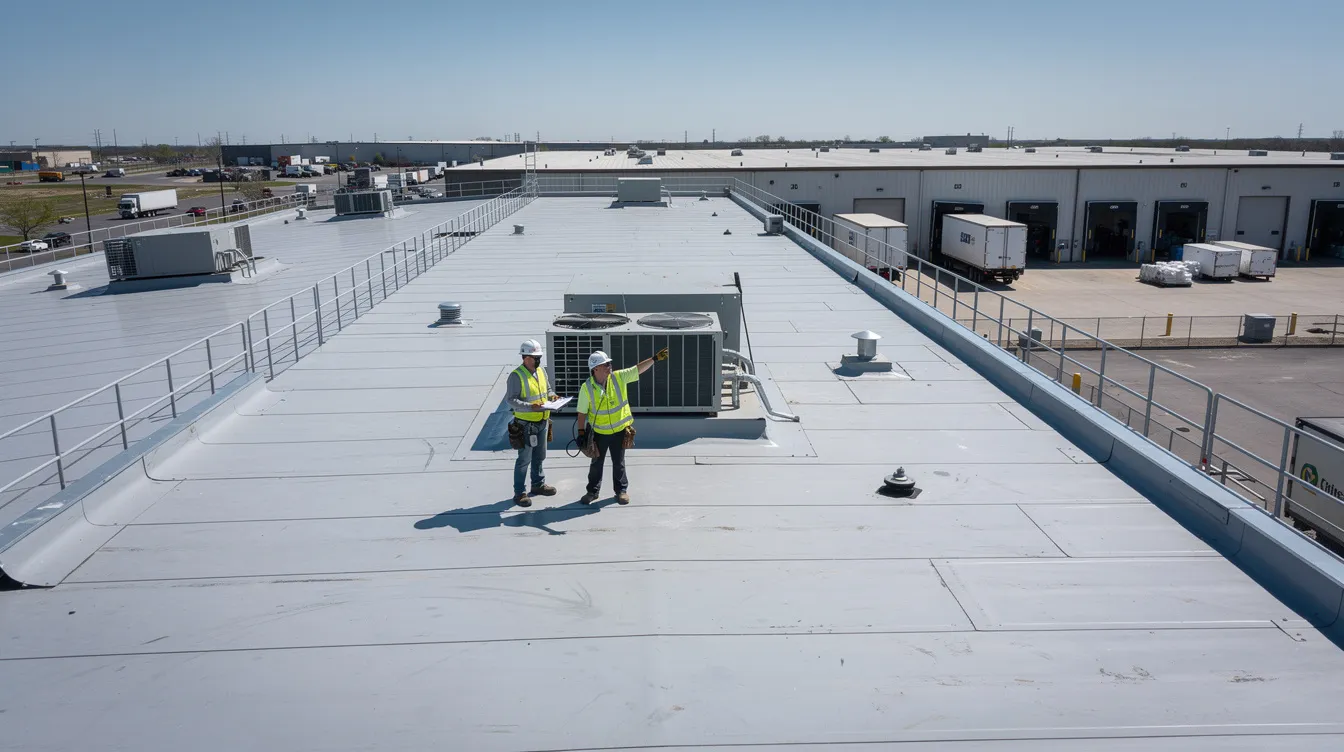
An incoming inspection report with photographs, attached to the lease, records the condition of the premises at commencement. This reduces arguments about fair wear and tear at the end.
The lease should also outline the landlord's response time for structural issues and any right of the tenant to carry out urgent repairs and recover costs if the landlord fails to act. Some landlords use an experienced managing agent (such as Rawson Property Group) to coordinate maintenance and ensure clarity between parties.
Assignment, subletting and changes in tenant structure
Business circumstances change. Tenants may sell their business, bring in partners, or need to downsize. Assignment and subletting terms dictate how a tenant may transfer lease rights to others, and these clauses deserve careful attention.
Assignment means transferring all rights and obligations under the commercial lease agreement to a new tenant, for example on sale of a running business. This usually requires the landlord's consent in writing.
Subletting means the tenant rents out part or all of the premises to a third party while remaining the primary tenant; again, typically allowed only with the landlord's consent and on specific conditions.
The lease should state when the landlord may reasonably withhold consent (e.g. poor financial standing of the proposed assignee) and whether the original tenant and sureties remain liable after assignment. If the tenant is a company, changes in shareholding or control are often treated similarly to an assignment and should be addressed.
Both parties benefit from negotiating these clauses upfront to balance landlord control with the tenant's ability to adapt or exit. This creates a mutually beneficial arrangement rather than a trap.
Consumer Protection Act (CPA) and other legal protections
The Consumer Protection Act (CPA) applies to commercial lease agreements where the landlord leases property in the ordinary course of business and the tenant is a "consumer" with an asset value or turnover below R2 million. Tenants under R2 million asset value are protected by the Consumer Protection Act, even in a commercial context.
For such tenants, the CPA introduces enhanced cancellation rights (including the right to cancel a fixed term lease with 20 business days' notice, subject to a reasonable penalty), limits on overly harsh terms, and a requirement that any unfair or unreasonable term be drawn to the tenant's attention in plain language.
Many small and medium businesses renting modest office or retail space fall within this threshold without realising it. Both landlord and tenant should verify CPA applicability before finalising lease terms. Read more about the CPA's impact on lease agreements for landlords.
Other relevant legal frameworks include common-law principles of contract, municipal zoning and building regulations, and health and safety legislation. This article is informational, not legal advice. Specific situations may require tailored input from an attorney or experienced commercial property professional.
Dispute resolution, default and termination clauses
No one plans for disputes at the start of a commercial lease, but the agreement must set out what happens if things go wrong.
Default clauses cover late or non-payment of rent payments, breach of permitted use, failure to maintain the premises, and similar issues. Default and remedies identify breaches of contract and outline legal remedies available to parties. The lease should include a process for written notice and a reasonable time to remedy (a "notice to rectify") before cancellation.
Termination clauses must spell out when and how either party may end the lease, including early termination rights, penalties, and whether the tenant can cancel on business failure or relocation. Lease agreements must clearly state termination grounds and notice periods. For more on early termination rights, see this guide.
Dispute resolution processes can include negotiation, mediation, and arbitration to resolve lease disagreements. Some landlords prefer arbitration for speed and confidentiality; others default to court. Dispute resolution methods may include negotiation or arbitration, and both options should be spelled out.
Clear notice provisions matter: how notices must be delivered, to which addresses (domicilium citandi et executandi), and when they are deemed received. Without these, time periods for remedies have no clear starting point. For practical steps on resolving rental disputes, see this resource.
Getting expert help with your commercial lease
Commercial leases are negotiable, complex documents. Whether you are a property owner building a rental portfolio or a tenant mapping out your investment strategy, having an experienced professional on your side pays for itself.
A full-service agency like Rawson Property Group assists at every stage: sourcing suitable commercial property, benchmarking market rentals, negotiating lease terms, and managing the property throughout the lease period. A well crafted commercial lease is both your shield and your business roadmap.
Landlords can standardise their commercial lease agreements and use Rawson's valuation service to set competitive, defensible rentals. The landlords' page covers rental and management solutions in detail.
Tenants and investors can browse current commercial listings and speak to a neighbourhood expert about lease requirements at no cost.
Ready to let or lease a commercial property? Book a free consultation with a Rawson Commercial specialist and make sure your next commercial lease agreement works for you, not against you.


