



Selling or buying a commercial building in South Africa means dealing with a stack of compliance certificates before the Deeds Office will register the property transfer. Missing even one certificate can stall the deal for weeks or kill it outright. Here is a clear breakdown of every certificate you need, who pays, and how to keep the process on track.
Which compliance certificates are needed for commercial property transfer?
Compliance certificates describe the property's safety and condition. Transferring commercial property in South Africa requires compliance certificates and health clearances, and the primary certificates are:
- Electrical certificate of compliance (ECOC): Required for every commercial property transfer, no exceptions. Covers the full electrical installation under the Occupational Health and Safety Act (Act 85 of 1993).
- Gas compliance certificate (Gas CoC): Required only where fixed gas installations exist (built-in hobs, industrial gas lines, gas geysers).
- Electric fence certificate: Required if the property has an electric fence system, or if the fence was installed or altered after 1 October 2012.
- Water installation certificate / plumbing certificate: Compulsory in the City of Cape Town; strongly recommended elsewhere. Many banks insist on it for high-value commercial deals.
- Beetle certificate: Not legally required for most commercial buildings, but sometimes requested for older timber-heavy permanent structures in coastal regions like the Western Cape and KwaZulu-Natal.
On top of these property compliance certificates, sellers must also provide clearance certificates (municipal rates, body corporate levies for individual sectional title units, SARS transfer duty receipts). This article focuses on the compliance side.
Rawson Property Group's commercial division can help sellers and buyers identify exactly which required certificates a specific property needs before signing an offer to purchase.
Compliance vs clearance certificates for commercial property
These two categories serve different purposes, and both are needed before the Deeds Office will register transfer.
- Compliance certificates confirm that installations on the property (electrical, gas, electric fence, plumbing, sometimes pest reports) meet safety standards under the Occupational Health and Safety Act, national building regulations, SANS codes, and municipal by laws.
- Clearance certificates confirm the seller's financial standing with authorities: municipal rates and taxes paid to a set transfer date, body corporate levies settled (for sectional-title commercial units), and any special levies cleared.
Freehold commercial properties need compliance certificates plus a municipal rates clearance certificate. Sectional-title offices, retail units, or industrial mini-factories also need a body corporate levy clearance certificate. Both compliance and clearance certificates are required for property transfer, and the conveyancing attorney lodges them together at the Deeds Office.
Compliance certificates must be obtained before listing the property where possible. Clearance certificates must be re-issued if transfer registration is delayed beyond their validity window.

Electrical certificate of compliance for commercial buildings
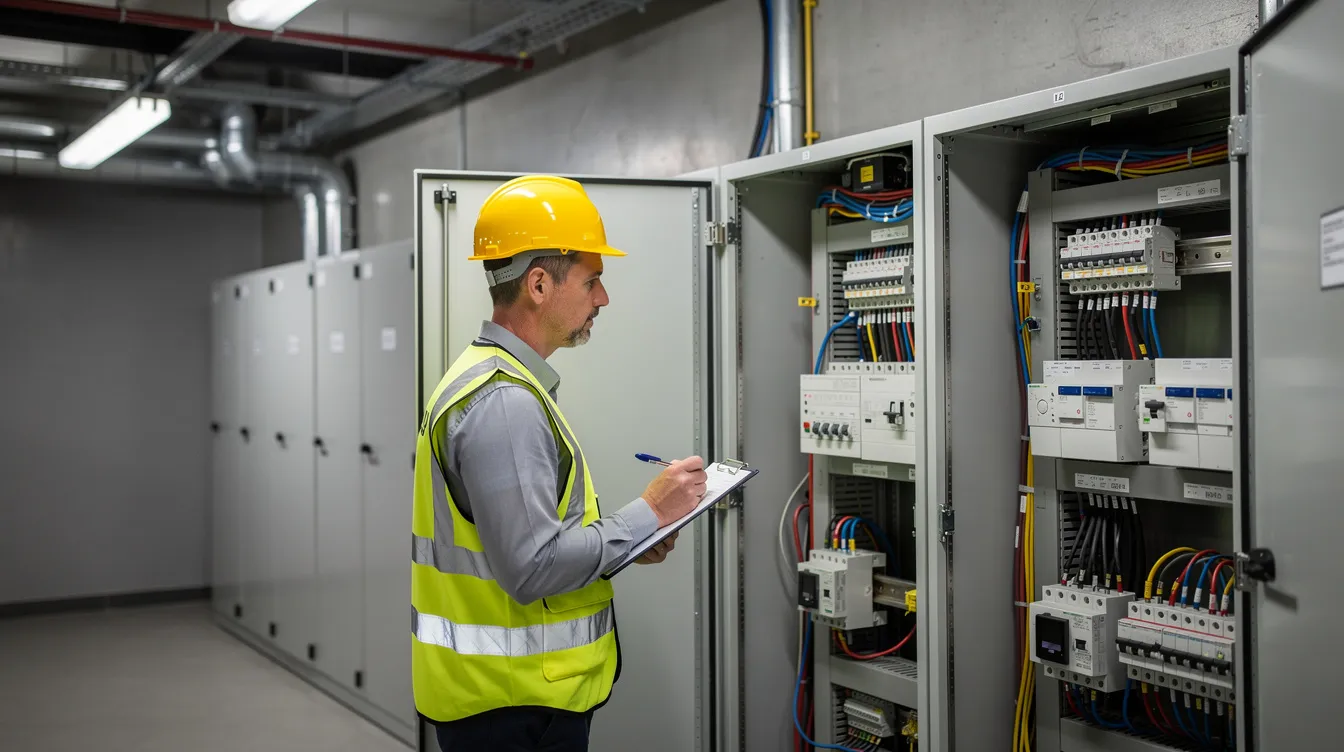
An electrical compliance certificate is non-negotiable. Whether the immovable property is a warehouse, office block, retail centre, or mixed-use building, the Electrical Certificate of Compliance is required under the Occupational Health and Safety Act for commercial properties. Certain certificates like the ECOC are essential for transferring ownership of commercial properties because they confirm the electrical installation complies with SANS 10142-1 (Wiring of Premises).
What the ECOC covers in a commercial context:
- The main distribution board and all sub-boards
- Fixed wiring, earthing and bonding throughout the building
- Socket outlets, light switches, and lighting circuits
- Emergency lighting circuits and fire alarm wiring
- Isolators for fixed appliances: lifts, HVAC systems, cold rooms, commercial kitchen equipment
- For multi-tenant buildings, common property electrical installations (lobbies, parking lighting, signage, external lighting)
- Solar PV and generator systems tied into the building's electrical work
An electrical compliance certificate is valid for two years from issue. Regulation 7(5) bars transfer of the property if the certificate is older than two years. Any alteration to the system (new machinery, added circuits, solar PV tie-in, new distribution board) requires a new certificate regardless of the existing certificate's age. Banks and insurers often insist on a fresh ECOC for larger commercial deals.
Only a registered person holding DoEL registration (Installation Electrician or Master Installation Electrician) may issue the ECOC. Certificates from unregistered individuals are invalid. Costs typically range from R850 to R2,500 depending on building size and complexity.
Gas compliance certificate (Gas CoC) for commercial kitchens and industrial users
Fixed gas installations appear in restaurants, bakeries, canteens, hospitality operations, laboratories, and buildings with gas geysers or industrial process lines. If your property has gas appliances connected to fixed pipework, you need a gas certificate of compliance.
A gas compliance certificate is required for fixed gas installations and confirms that all pipework, regulators, safety shut-off valves, and permanently installed appliances are leak-free and meet the Pressure Equipment Regulations (2009) under the Occupational Health and Safety Act. Sellers must obtain a gas compliance certificate if applicable.
When is a Gas CoC needed?
- Whenever a fixed gas installation exists (built-in stoves, piped gas supply, central cylinder cages with reticulation)
- Not needed for small portable cylinders connected directly to loose appliances via flexible hoses (e.g. a stand-alone patio heater that is not part of the building system)
- Gas compliance certificates are valid for 5 years from issue, but the Pressure Equipment Regulations say a certificate must be issued after installation, modification, alteration or a change of ownership and the seller is responsible for obtaining it.
Only an authorised person registered with SAQCC Gas or the Liquefied Petroleum Gas Safety Association of Southern Africa may issue the Gas CoC. Costs run approximately R900 to R2,000.
Practical example: A restaurant building in Cape Town with four built-in gas hobs, a gas oven, and a central gas cage needs a full Gas CoC covering regulators, safety shut-offs, the cylinder cage, and all pipework. Without a valid certificate, the purchaser's bond provider will likely refuse to release funds, and the deal stalls.

Electric fence certificate for commercial security systems
High-security electric fences are standard around warehouses, logistics hubs, factories, retail parks, and office parks. An electric fence installation triggers a separate electric fence certificate, distinct from the ECOC.
What it covers:
- Compliance with the Electrical Machinery Regulations (2011) under the Occupational Health and Safety Act
- Testing of energisers, earthing, insulators, warning signage, height clearances from public roads
- Integration with security gates and access control
- For sectional-title or business parks, the perimeter electric fence on common property is usually the body corporate's responsibility
Electric fence certificates are required if the fence has been altered after 1 October 2012, or whenever the property changes ownership. Only a qualified Electric Fence System Installer registered with the Department of Employment and Labour may issue the certificate.
There is no fixed statutory expiry, but a current certificate becomes outdated when ownership changes or the electric fence installation is materially modified. In larger commercial transactions, banks and insurers may demand a recent test confirming the electric fence installation complies with regulations. Expect costs of R900 to R2,500.
Water and plumbing compliance certificates for commercial property
Plumbing compliance is fragmented across South Africa. Some requirements sit in the national building regulations (SANS 10252, SANS 10254), while formal water compliance certificate requirements are imposed by specific municipalities.
The Cape Town model: The City of Cape Town Water By-law (2010) requires a water installation certificate of compliance on every property transfer within its jurisdiction, including commercial buildings. It verifies that:
- The water meter registers correctly
- The water installation conforms to municipal standards
- No leaks cause water wastage
- No cross-connection exists between stormwater and the sewerage system
- Hot-water cylinders are installed safely with pressure relief valves
An accredited plumber registered with the local authority issues the Cape Town water installation certificate.
Other municipalities: Outside Cape Town, few metros mandate a formal plumbing certificate for transfer. But commercial buyers and banks increasingly request one for high-value buildings. For large office or industrial buildings, plumbing compliance often extends to fire-hydrant and sprinkler feeds, backflow prevention devices, and roof drainage systems.
Sellers are responsible for ensuring plumbing compliance certificates are valid. Plumbing certificates ensure water installations meet national regulations and that no water leaks or defects exist. Unseen leaks can inflate municipal accounts and undermine rental projections. Non-compliant fire water installations can invalidate insurance.
Beetle certificates and other specialised reports in a commercial context
Beetle certificates are traditionally associated with residential coastal properties, but they sometimes surface in sales of older commercial buildings with extensive timber roofs, mezzanine floors, or accessible wood framing in the Western Cape and KwaZulu-Natal.
A beetle compliance certificate confirms the absence of wood-destroying beetles (woodborer, termites, and other wood-destroying insects) in structural timber. Beetle certificates are not legally required under national law, but a Beetle Clearance Certificate is often required in coastal regions for wooden structures to ensure they are free of wood-destroying insects. They are contractually inserted into sale agreements. Beetle certificates are typically valid for 3 to 6 months.
Other reports common in commercial deals (not formal compliance certificates, but often bundled into due diligence):
- Fire Safety Compliance Certificate: Confirms compliance with municipal fire codes for fire-fighting equipment and emergency routes. Fire safety compliance requirements may involve verification of fire systems and emergency plans, depending on the property.
- Asbestos survey: For older industrial or office buildings with asbestos roofing or insulation.
- Structural / roof reports: Where there are known defects or heavy industrial use.
- Energy Performance Certificate: Required for larger commercial buildings of 2,000 m² or more by December 2025.
These additional reports may be requested by buyers, banks, or insurers and can cause delays if not obtained in time.
Legal framework, non-compliance risks, and who pays for the certificates
Compliance certificates are required under the Occupational Health and Safety Act and associated regulations (Electrical Installation Regulations, Pressure Equipment Regulations, Electric Fence Regulations). The national building regulations and Building Standards Act set construction and installation standards, while municipal by laws govern water, fire safety, and zoning.
What happens with non compliance:
- Banks often refuse to release bond funds without compliance certificates, which can delay registration or collapse the sale entirely
- Buyers may withhold payment if compliance certificates are missing
- Insurance claims for fire, gas explosions, electrical faults, or flooding can be rejected if installations are not legally compliant
- Sellers risk losing the deal without required certificates; non-compliance can lead to financial penalties for sellers
- Sellers face reputational damage from failing to provide certificates, particularly in commercial markets where word travels fast among investors and tenants
Who pays? The seller typically pays for compliance certificates during a sale. This is the seller's obligation unless the offer to purchase allocates costs differently. In commercial transactions, buyers sometimes agree to accept a known deficiency (e.g. an outdated electric fence certificate) in exchange for a price reduction or escrow arrangement. This must be recorded in writing. For a broader look at what documents and compliance certificates sellers need, see our detailed guide.
When to obtain certificates, and how they slot into the commercial conveyancing process
Commercial sales are often time-sensitive, tied to lease expiries, refinancing, or development timelines. Getting compliance certificates sorted early prevents last-minute surprises.
Recommended sequence:
- Identify all installations on the specific property (electrical, gas, electric fence, water, solar, borehole) and confirm which certificates are needed. Compliance requirements differ by the municipality and specifics of the property being transferred in South Africa.
- Commission inspections from registered professionals.
- Complete remedial work (old DB boards, under-spec electric fence, non-compliant gas cages).
- Receive issued certificates once installations pass.
- The conveyancing attorney collects all original certificates alongside SARS transfer duty receipts and municipal/body corporate clearance certificates.
- Documents are lodged with the Deeds Office for registration.
Missing or outdated certificates can delay registration and push out the transfer date. Transactional costs and documentation for commercial properties vary and should be explored based on local practices and requirements.
For new or redeveloped commercial buildings, a Certificate of Occupancy verifies that a building adheres to approved architectural plans and local authority regulations. A Zoning Certificate verifies the authorized land-use rights of the commercial property by the local municipality. Occupancy certificates and approved building plans must be verified for commercial properties to ensure the property meets authorization for use. Lenders want to see an occupancy certificate plus electrical and fire compliance before releasing funds for income-producing properties. Understanding transfer costs when purchasing commercial property is equally important for buyers navigating this process.
How Rawson Property Group can help with commercial compliance and next steps
Rawson Property Group has operated across Southern Africa for over 40 years, with more than 230 franchises and 1,500 agents. Our commercial brokers handle office, retail, industrial, and mixed-use transactions daily, and they know exactly which legal obligations apply to each building type.
Here is how we help property owners and buyers:
- Commercial brokers identify which compliance certificates a specific property needs before you go to market, so there are no surprises after signing.
- Agents can recommend reputable registered electricians, gas installers, and electric fence specialists to handle inspections and remedial work.
- Rawson Finance supports buyers with bond origination and coordinates lender compliance requirements, so you can get prequalified and find out what you can afford.
Ready to sell? Visit our Rawson Commercial page or Sell with Rawson to request a valuation and discuss compliance planning. Buyers can start their property search at rawson.co.za. Landlords of income-producing commercial buildings can check rental potential using our rental valuation tool.
While compliance certificates can feel technical, having the right commercial agent and conveyancing attorney on your side makes the process straightforward. Start early, use registered professionals, and keep your original certificates organised. If you are looking to get financed for a commercial purchase, or want to grow a property career focused on professional, compliant transactions, book a free consultation with your nearest Rawson office.


