



You don't need millions of rand or a set of building keys to benefit from commercial real estate. Today, South African investors have numerous opportunities to gain exposure to offices, warehouses, shopping centres, and mixed use developments - all without signing a single lease or fixing a single roof.
5 Ways to Invest in Commercial Real Estate Without Owning a Building Outright
Commercial real estate investment can enhance portfolio diversification and generate passive income, even if you never set foot in the building. Here are five concrete ways to invest in commercial property without direct property ownership:
- Listed commercial REITs on the JSE (e.g. Growthpoint Properties, Redefine Properties) - real estate investment trusts allow investment in property without direct ownership risks, and you can buy shares for a few hundred rand.
- Property funds and ETFs - real estate mutual funds and ETFs provide diversified exposure to real estate securities across local and global markets.
- Private commercial property funds and syndications - investors can pool capital through syndications for larger deals managed by professional operators.
- Debt-based investments - earn interest from loans secured by commercial buildings instead of owning equity in them.
- Crowdfunding and tokenisation platforms - pooled investment options can make accessing commercial real estate equity easier for individual investors, sometimes from as little as R100.
These structures remove landlord duties like managing commercial tenants, handling repairs, and negotiating lease agreements - but still provide exposure to rental income and potential capital growth. Many investors start with modest monthly income contributions or once-off lump sums rather than paying millions for a single building.
Rawson Property Group can help you compare direct ownership versus indirect commercial property investment and align choices with your investment goals.

Why Look Beyond Direct Ownership of Commercial Properties?
Direct ownership means buying an office, retail space, or industrial building in your own name or company. It's capital-intensive and hands-on. Here are the main barriers:
- Large down payment: commercial mortgages require down payments of 20%–35%, and you should expect down payments of 20% to 35% for commercial mortgages on decent South African stock - often R5 million or more before transfer costs.
- Tougher financing: commercial loans have shorter terms than residential loans, with stricter lending criteria and significantly higher financing costs.
- Vacancy exposure: vacant commercial properties can lead to significant cash flow loss when a single tenant leaves.
- Management complexity: specialist leases, maintenance, compliance, and negotiations with tenants demand time and expertise.
On the flip side, commercial properties generate higher rent per square meter than residential, which is precisely why they attract investors. Indirect routes let you tap into that advantage while spreading risk across many assets and tenants, lowering the minimum investment amount, and outsourcing day-to-day management. For many first-time or mid-sized investors, starting indirectly is a smarter on-ramp into commercial real estate investing than jumping into direct ownership on day one.
Option 1: Listed Commercial REITs – Commercial Property in Your Share Portfolio
REITs are companies that own income-producing real estate - portfolios of offices, malls, logistics parks, and mixed use developments. South Africa formalised its REIT regime in 2013, aligning the market with international practice. REITs allow investment in real estate without direct ownership, making them one of the most accessible investment vehicles for commercial real estate investing.
How it works:
- Investors buy shares in REITs instead of physical properties - via a stockbroker or online platform, sometimes for a few hundred rand of your own money.
- REIT shares trade on stock exchanges like regular stocks, so you can sell during market hours.
- REITs must distribute at least 75% of taxable earnings to shareholders, paid out as regular dividends funded by rental income from commercial tenants.
- Investors can start with REITs for lower capital commitments - no need for a massive purchase price or second mortgage.
SA examples: Growthpoint Properties holds roughly R157.5 billion in property assets and delivers a trailing dividend yield of approximately 7.9%–8.3%. Redefine Properties, SA Corporate Real Estate, and Fortress Real Estate Investments are other major names.
Advantages over owning a single building:
- Very low minimum investment amount
- REITs provide liquidity compared to direct property ownership
- Built-in diversification across dozens of properties and hundreds of tenants
Risks to watch:
- Sensitivity to interest rates - REIT share prices can fall when rates rise
- Market sentiment driving share price volatility that doesn't always mirror underlying property values
- Sector concentration - office property versus industrial versus retail behave very differently

Option 2: Commercial Property Funds and ETFs
Instead of picking individual REITs, you can buy unit trusts or ETFs focused on commercial property - locally and globally.
Asset managers pool investor capital and invest across multiple commercial REITs and related securities. Some funds focus on South African commercial property; others target global REITs covering US offices, European logistics, and Asian data centres. Real estate ETFs offer instant diversification across various property types and regions, and they trade on the JSE like any share.
Benefits versus buying one or two individual REITs:
- Extra diversification across managers, sectors, and geographies
- Professional portfolio construction and rebalancing
- Access to global commercial real estate that would be impossible to buy directly
Practical points:
- Investors can start with small monthly debit orders into unit trusts (e.g. R500–R1 000 per month)
- Income distributions are typically quarterly or semi-annual
- Real estate investment approaches vary widely in terms of liquidity and risk profiles
Quick comparison: if you put R10 000 into a single local REIT, you get concentrated exposure - higher potential yield but more idiosyncratic risk. The same R10 000 in a diversified listed property ETF spreads your money across many REITs, potentially offering more stable (if slightly lower) returns. Your investment strategy and risk tolerance should guide the choice.
Option 3: Private Commercial Property Funds, Syndications and Club Deals
Private commercial property funds and syndications let investors "co-own" larger buildings or portfolios without taking on full landlord responsibilities. Syndications enable multiple investors to buy a single property together, while commercial property funds pool money from investors to buy properties across different categories.
Typical structure:
- A specialist operator acquires an asset - say a R120 million industrial park in Johannesburg
- Investors contribute capital in minimum tranches (e.g. R250 000–R1 million)
- The fund owns the physical property; the operator manages leasing, financing, and operations
Passive investors receive a share of net rental income (quarterly or bi-annually) and participate in capital growth when properties are sold. Commercial leases typically last for 3 to 15 years, meaning long-term leases can last from 3 to 15 years and provide consistent demand and stable cash flow. Investing in smaller properties within a syndication also reduces capital requirements and competition.
Leveraging increases potential returns but also amplifies losses when things go wrong. Some SA syndications target projected yields of 9–20% per annum, though higher returns come with higher risk and lower liquidity.
Due diligence essentials:
- Check the operator's track record in South African commercial real estate markets
- Confirm their own capital is at risk alongside other investors
- Study fee structures, preferred returns, target hold period (often 5–10 years), and exit strategies
- Involve a commercial real estate attorney and accountant before committing money
Rawson's commercial division can help you understand realistic market rentals, vacancy assumptions, and financing costs when evaluating a private commercial property investment proposal.
Option 4: Debt-Based Investments in Commercial Property
Instead of owning equity in a building, you can earn interest by funding loans secured against commercial properties. Investing in real estate debt allows investors to earn interest from loans secured by properties - a fundamentally different deal from equity ownership.
Typical structures:
- Participation in senior or mezzanine loans for developments (e.g. financing part of a new logistics park)
- Crowdfunding platforms that pool smaller investment amounts into commercial real estate loans - real estate crowdfunding allows investors to pool money for specific property projects
- Direct private lending with first-bond security over a commercial property
- Mortgage-backed securities (MBS) enable investment in commercial real estate loans instead of properties
Investors in real estate crowdfunding can participate in equity or debt financing. In South Africa, platforms like Crowdprop offer regulated entry from R10 000 with advertised returns around 8%, while UbuntuBriX allows fractional ownership via tokens from as little as R100.
Benefits:
- Predictable interest income at agreed rates (e.g. prime + 3% or fixed double-digit yields)
- Clear term (12–60 months) with repayment at maturity
- Priority over equity investors in the capital stack if something goes wrong
Risks:
- Borrower default risk and dependence on project success
- Limited or no liquidity - cash may be locked in until the loan is repaid
- Potential delays if commercial tenants are slow to lease space
Rigorous due diligence on the borrower, security, and legal documentation is essential before investing in commercial real estate debt.
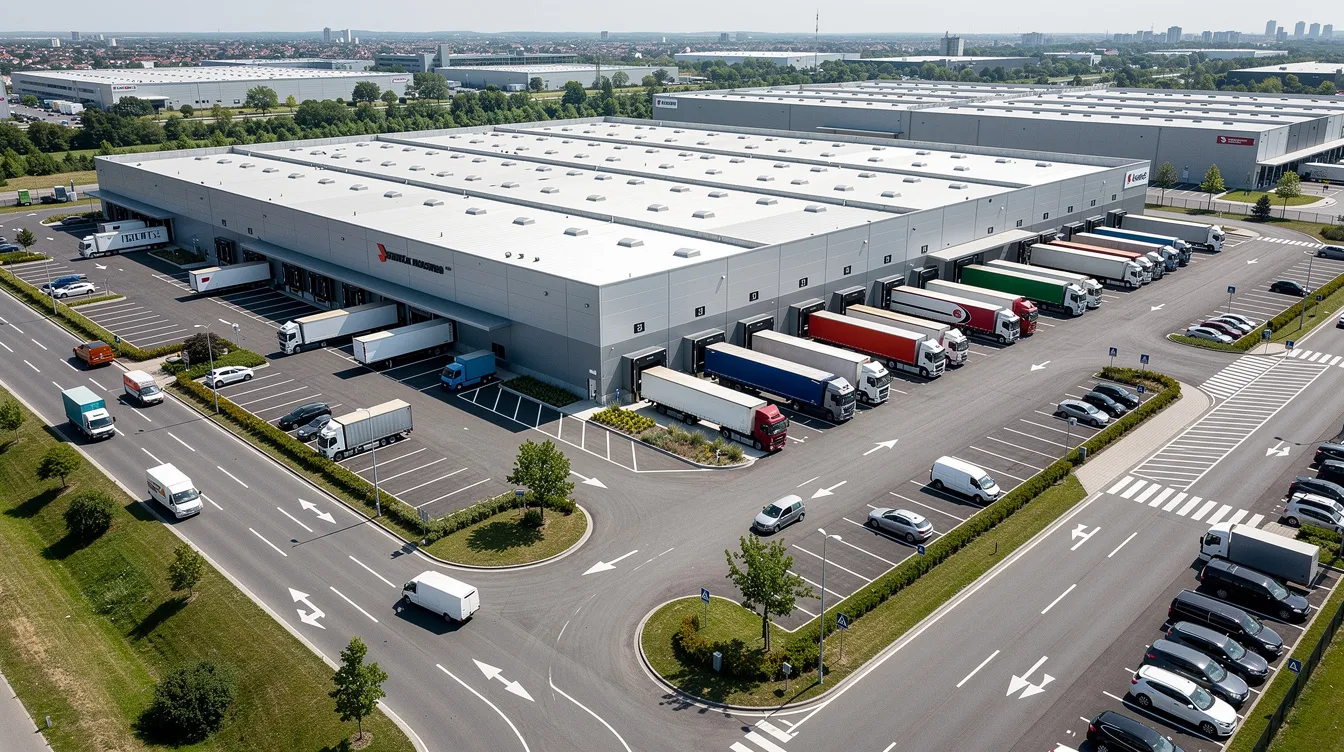
Comparing Indirect Commercial Real Estate Investing vs Direct Ownership
Here's how indirect options stack up against buying a building yourself:
- Investment amount: Direct ownership requires millions of rand plus transfer costs. Indirect options can start from a few hundred rand (listed) or tens of thousands (private vehicles).
- Control: Direct ownership gives full decision-making power over leases, renovations, and financing options. Indirect means you rely on professional managers.
- Risk concentration: Direct ties you to one or a small number of commercial properties and tenants. Indirect provides a diversified portfolio across many assets and markets.
- Liquidity: Commercial properties can take months to sell, especially when demand is weak. Listed options are tradeable on exchanges; private funds remain relatively illiquid.
Commercial leases often include annual rent increases tied to inflation, which protects income for both direct and indirect investors. But evaluating financing costs is essential before securing loans - always run financial numbers to ensure positive cash flow before any purchase or commitment.
Indirect vehicles may smooth returns through diversification but can also cap upside through management fees and conservative gearing. Match the structure with your goals, time commitment, and appetite for hands-on involvement.
Key Risks, Interest Rates and Due Diligence for Non-Owners
Not owning the building doesn't remove risk - it changes the type of risk you manage.
Higher interest rates can increase debt costs and reduce property values across REITs, funds, and syndications. When rates rise, mortgage payments climb, distributions may shrink, and property values can soften. Debt investors may benefit from higher headline yields but still face borrower stress.
Core due diligence steps for all indirect investments:
- Study historical data on distributions, vacancy rates, and tenant quality - analyze local job growth and vacancy rates before investing
- Understand leverage levels and debt maturity profiles (e.g. Growthpoint's SA REIT LTV sits around 40%, with interest cover of approximately 2.7×)
- Review fee structures and performance incentives
- Check regulatory status and audited financial statements
- Perform due diligence to avoid costly oversights in investments
Avoid putting all investable funds into one commercial syndication or single REIT. Diversify across vehicles, sectors (industrial, office, retail), and geographies. Work with a professional financial adviser and a neighbourhood-expert property partner like Rawson to interpret documents and understand capex rate assumptions realistically.
Building Your Wider Property Portfolio Around Indirect Commercial Exposure
Commercial property should be one part of a balanced portfolio alongside residential property, cash, bonds, stocks, and equities. South African investors can combine:
- Directly owned residential investments (single family homes, flats, townhouses) for relative stability and lower barriers to entry
- Indirect commercial real estate investing for higher returns and longer commercial leases
- Business ownership or investments via Rawson's business brokering arm for additional monthly income streams
Conservative investors might lean toward more residential rental properties and listed commercial REITs. Growth-oriented investors might allocate more to private commercial syndications and development funds, balanced with core listed property.
Bond origination and pre-qualification services from Rawson Finance can help you understand how much leverage you can safely afford before adding any direct commercial properties later. Think long term - 10+ years - and periodically rebalance as interest rates, income needs, and market cycles change. Population growth and job growth in key nodes will continue driving demand for well-located commercial assets.
How Rawson Property Group Can Help You Invest in Commercial Real Estate
Rawson Property Group supports South African investors and buyers at every stage - from residential to complex commercial strategies. Here's how we can help:
- Commercial sales and rentals team: real-time insight into market rentals, demand from commercial tenants, and realistic vacancy assumptions for any deal you're analysing
- Property valuation tools: professional commercial and industrial valuations to benchmark underlying asset values against local market conditions
- Bond origination: for investors who decide to blend indirect investments with a small directly owned commercial or residential property
Ready to invest in property but not sure where to start? Start your property search now or book a free consultation with one of our neighbourhood experts. Want to understand what your existing property is worth before reallocating into commercial real estate? Find out what your property is worth using our free valuation tool.
If you're an entrepreneur or professional who wants to build a business around commercial property - not just invest passively - explore becoming a Rawson franchisee and turn your market knowledge into a career.
You don't need to buy a building to benefit from commercial real estate. You just need the right investment strategy, solid due diligence, and the right team beside you to sell you on the facts - not the hype.


