



A commercial lease is a legally binding agreement between a property owner and a business tenant for the use of premises such as offices, shops, or industrial property like warehouses and factories. Think of a five-year office lease in Sandton or a warehouse lease in Epping-these are everyday examples of how many businesses secure the space they need to operate.
Commercial property leasing in South Africa is governed primarily by common law, not a single overarching statute. The lease agreement itself carries most of the weight. The basic flow is straightforward: you find suitable premises, negotiate contract terms, sign a commercial lease agreement, move in, pay rent and operating costs each month, and eventually exit or renew when the lease ends.
South African law treats commercial leases very differently to residential leases. The Rental Housing Act does not apply to commercial property, and the Consumer Protection Act only kicks in under specific circumstances. Understanding how commercial leases work matters because rent is often a business's largest fixed cost, directly affecting cash flow, risk exposure, and long-term strategic planning. Leasing requires lower upfront costs than buying commercial property, and it offers flexibility for businesses needing to adapt quickly-but the fine print can catch you off guard if you're not prepared.

South African Legal Framework for Commercial Leases
Commercial property leasing in South Africa is shaped by a combination of common law, the written lease itself, and a handful of specific statutes. There is no single statute regulating commercial leases in South Africa, which is why the lease agreement you sign carries so much importance.
Most commercial rental contracts are governed by the South African common law of lease (locatio conductio rei) together with whatever the parties negotiate into their contract. Compared to residential properties, commercial tenants receive limited statutory protection. The Rental Housing Act 50 of 1999 and the PIE Act apply exclusively to residential leases, so eviction and enforcement for commercial tenants follow contract and common law rules only.
The Consumer Protection Act, 68 of 2008, may apply to a commercial lease-but only if the tenant is a natural person or a juristic person whose asset value or annual turnover is at or below R2 million at the time of the deal. Larger companies fall outside its protections entirely.
Long leases of 10 years or more (including renewals) should be registered against the title deed at the Deeds Office. Without registration, a long lease may not be enforceable against future owners and third parties. Local municipal by-laws, zoning schemes, and building regulations also affect what you can and cannot do with a leased property-so legal compliance extends well beyond the lease document.
One more thing worth noting: commercial leases can be valid even if not in writing. An oral agreement can technically hold up under South African law. That said, written contracts are strongly emphasised in commercial leasing to reduce disputes and prevent future disputes over what was actually agreed.
Understanding the Commercial Property Market in South Africa
The commercial property market covers three broad categories: offices, retail space, and industrial property (warehouses, factories, logistics facilities). Each behaves differently and responds to distinct economic forces, unlike residential properties where lifestyle and location dominate pricing.
Post-COVID hybrid work continues to soften demand for traditional office space in nodes like Sandton and Cape Town CBD, pushing vacancy rates higher. Landlords in these areas are offering incentives-rent-free periods, fit-out contributions, and flexible lease terms. Meanwhile, logistics and warehousing along key corridors (N1, N3, R21) remain comparatively strong, driven by e-commerce growth and supply chain shifts.
Commercial properties are valued based on rental income potential-rental per square metre, lease duration, and tenant quality-rather than the lifestyle factors that influence residential property values. Buying commercial property builds equity over time, but ownership involves ongoing maintenance responsibilities and capital outlay. Leasing, on the other hand, can limit long-term control over property use and modifications, which is why your property choice should align with your business plans.
Landlords and tenants typically work through specialist commercial brokers to interpret market rentals, incentives, and vacancy levels. If you want to understand current pricing, browsing live listings on Rawson's commercial search page gives you a practical snapshot of asking rentals across South Africa.
Key Differences Between Commercial and Residential Leases
Many South Africans are familiar with renting a flat or house, but the jump to renting commercial property comes with surprises. The key differences are significant enough to trip up a first-time business owner.
Commercial leases usually run for longer fixed terms-typically 3, 5, or 10 years-with clear escalation clauses and limited rights to cancel early. Residential leases often run 6–12 months with easier exits. In a commercial lease, the tenant pays base rent plus operating costs, municipal rates, utilities, and sometimes marketing or common-area charges. Residential tenants more often pay a single rental plus utilities.
Residential leases enjoy stronger statutory protections via the Rental Housing Act and PIE. Commercial leases prioritise business flexibility and freedom of contract, placing greater responsibility on tenants to negotiate favourable terms. The Consumer Protection Act almost always applies to residential tenants (who are natural persons), but in commercial leases the CPA may not apply if the tenant is a larger company. For a deeper comparison, see our guide on commercial versus residential property as an investment.
| Feature | Commercial Lease | Residential Lease |
| Typical term | 3–10 years | 6–12 months |
| Primary regulation | Common law + contract | Rental Housing Act, PIE, CPA |
| Cost structure | Base rent + operating expenses | Single rental + utilities |
| Exit clauses | Negotiated, often restrictive | Easier early termination |
| Dispute resolution | Contract-based (mediation, arbitration, court) | Rental Housing Tribunal available |
| Tenant protections | Limited; largely negotiated | Stronger statutory protections |
Types of Commercial Properties and Typical Leases
Different types of commercial or industrial property use distinct lease structures and contract terms, so understanding what you're leasing matters as much as understanding the lease itself.
Retail property includes shops in malls, high-street locations, and neighbourhood centres. Retail leases often include turnover rental (a base rent plus a percentage of sales above a threshold), marketing fund levies, strict trading hours, and tenant mix controls. The retail sector demands careful consideration of foot traffic and anchor tenant proximity.
Office property spans multi-tenant blocks, office parks, and serviced offices in areas like Rosebank, Umhlanga Ridge, and Century City. Key negotiation points include parking ratios, fibre connectivity, backup power, and fit-out allowances.
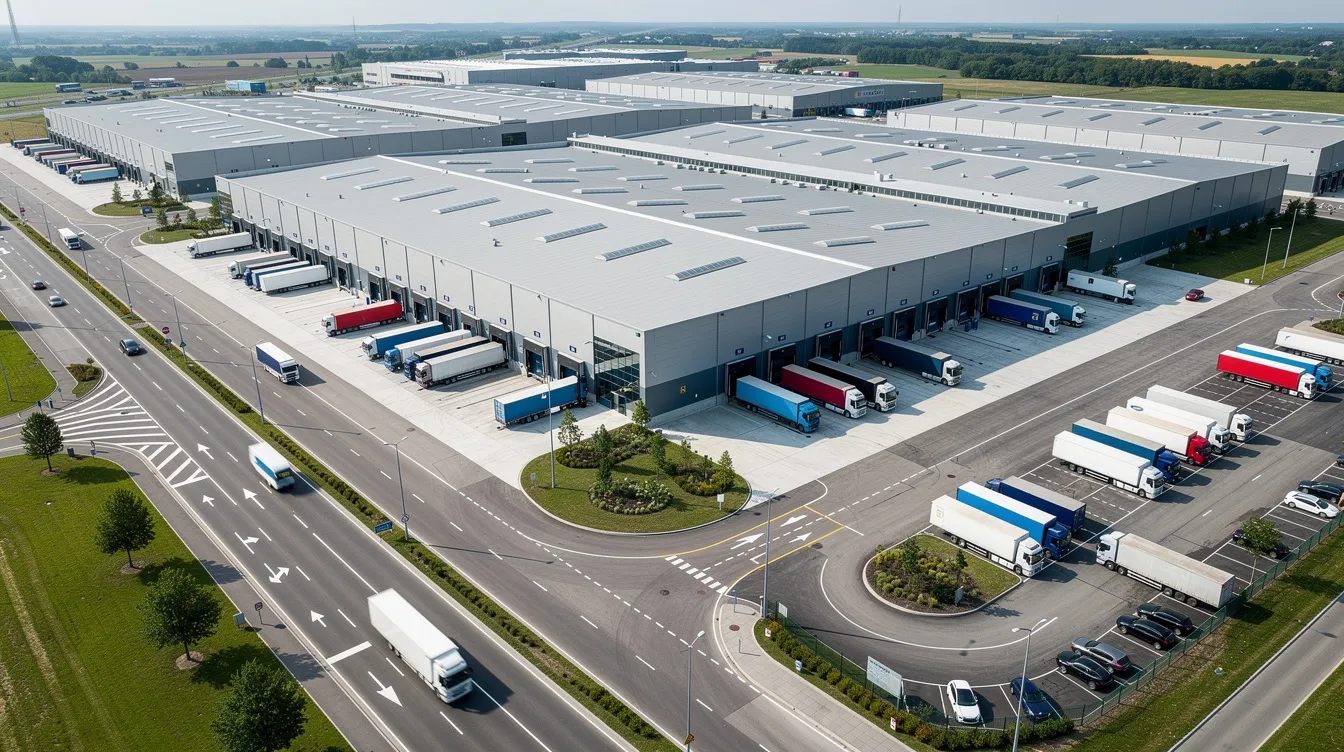
Industrial property covers manufacturing plants, storage warehouses, and logistics hubs in nodes such as Midrand, Montague Gardens, and Prospecton. These properties often feature large yard space, high-volume ceilings, and triple-net lease structures where such tenants take on most operational costs.
Contract terms-escalations, operating costs, fit-out, reinstatement, and security requirements-vary meaningfully between these property types. A "standard" commercial lease is rare. Working with experienced commercial property professionals helps match your business needs with the right property type and lease structure.
Common Types of Commercial Lease Structures
In South Africa, commercial properties are typically let on a few standardised structures that allocate costs differently between landlord and tenant. Understanding these isn't just paperwork-it directly affects your monthly outgoings.
Gross lease: Rent includes most property operating expenses-municipal rates, insurance, and common-area maintenance. The tenant mainly pays their own utilities and internal costs. This structure simplifies budgeting but usually comes with higher base rents.
Net lease / triple net lease: The tenant pays base rent plus most operating costs such as rates, insurance, security, cleaning, refuse removal, and sometimes structural repairs. This is more common in industrial property and standalone buildings, and gives landlords a more predictable rental income stream.
Semi-gross lease: A hybrid where certain costs (security, cleaning) are passed through while others remain the landlord's responsibility. These should be clearly itemised in the commercial lease agreement to avoid surprises.
Worked example: A 500 m² mini-factory in Cape Town with base rent of R100/m² per month (R50,000) plus operating costs of R20/m² per month (R10,000) results in a total monthly occupancy cost of R60,000. With an 8% fixed percentage escalation, that base rent climbs to approximately R54,000 in year two-and roughly R73,500 by year five.
Commercial leases typically use gross or net lease structures to define operating cost responsibilities. Knowing which structure applies is critical for cash flow planning and for comparing different commercial properties on a like-for-like basis.

Key Contract Terms in a South African Commercial Lease Agreement
Every commercial lease agreement is negotiable, but most contain core contract terms that determine risk, flexibility, and long-term cost. Before signing, every clause should be carefully discussed between the parties involved-and ideally reviewed by an associate attorney or legal advisor.
Parties and premises: The lease identifies the landlord and tenant, describes the premises (including floor area and parking bays), and sets the lease term with clear start and end dates. Commencement conditions might include completion of fit-out or regulatory approvals.
Rental clauses: A commercial lease must specify rental and escalation terms. This includes base rent per square metre, the monthly amount, due date (often monthly in advance), and the annual escalation-either a fixed percentage (standard rental escalation rates in South Africa typically range from 7% to 10% annually) or a CPI-linked formula. Retail leases may add turnover rental components. For more on navigating rental increases, it's worth understanding what's market-related.
Operating costs: These include municipal rates and taxes, utilities, security, cleaning, refuse removal, common-area maintenance, and marketing funds in shopping centres. Tenants may pay additional operating costs on top of rent, and the lease should specify how these are calculated and reconciled annually.
Maintenance obligations: Tenants typically cover interior maintenance while landlords handle exterior and structural repairs. Commercial leases often include specific clauses for maintenance responsibilities, and incoming inspection reports help prevent future disputes about property condition.
Use and zoning: A lease should outline permitted use and alterations of the property. Operating outside the agreed use-or outside municipal zoning-can expose both parties to fines or forced closure.
Subletting and cession require the landlord's consent. This means that tenants cannot transfer their lease or sublet the property to another party without obtaining explicit permission from the landlord. This clause protects the landlord's interests by ensuring they have control over who occupies their property and can assess the suitability of any new occupant.
Security deposits usually range from one to three months' rent. These deposits serve as financial security for landlords against potential damages, unpaid rent, or breaches of the lease agreement. The lease should specify the exact amount of the deposit, how it will be held, conditions for its return, and whether any interest accrued on the deposit will be paid to the tenant.
Insurance obligations should be split clearly between the parties. Typically, landlords are responsible for insuring the building structure, while tenants must insure their own belongings and any improvements or fixtures they install. Clear insurance terms help prevent disputes and ensure both parties understand their responsibilities in the event of damage or loss.
The landlord holds a tacit hypothec: a common-law right over the tenant's movable goods on the premises to secure unpaid rent. This legal right allows the landlord to claim the tenant’s movable assets located on the leased property if rent payments fall into arrears. However, enforcement requires a court order and the involvement of the sheriff to attach the goods before they can be sold to recover outstanding rent.
Personal or corporate suretyship may be required. Landlords often ask tenants or third parties to provide a suretyship as additional security for the lease obligations. This means that the surety (an individual or company) guarantees payment of rent and other liabilities if the tenant defaults, providing landlords with greater financial protection.
For a checklist of what to look for, read everything you need to know about signing a commercial lease.
Exit Clauses, Renewal Options and Dispute Resolution
How a lease ends is just as important as how it begins. Whether you're planning a relocation, expansion, or business sale, the exit clauses and renewal procedures in your lease determine your options-and your costs.
Fixed-term vs month-to-month: Most commercial leases run for 3, 5, or 10 years (commercial leases typically last from one to ten years). At the end of the term, many continue on a month-to-month basis unless renewal options have been exercised. Notice periods for renewal are typically 6–12 months before expiry.
Early termination and break clauses: The lease must define termination and exit clauses clearly. Early cancellation rights, if any, come with penalties or damages payable. A landlord's right to cancel on breach usually follows written notice and a specified remedy period (often 7–20 business days). Where the Consumer Protection Act applies, Section 14 may grant the tenant early termination rights subject to reasonable penalties. Effective eviction procedures are essential in commercial leases to avoid illegal self-help evictions.
Renewal mechanisms: Common approaches include market-related rental renegotiation, pre-agreed escalation, or independent valuation if parties can't reach a mutual agreement. Documenting renewal procedures upfront reduces conflict later.
Dispute resolution: Well-drafted clauses typically follow a sequence: negotiation between the parties, then mediation, then arbitration, with High Court litigation as a last resort. These provisions save both sides time and money. To avoid common pitfalls, review our guide on 7 mistakes to avoid when signing a commercial lease.
How Commercial Leases Affect Business Cash Flow and Strategy
For many businesses-from SMEs to corporates-rent is one of the largest fixed costs. The lease terms you agree to directly influence your financial resilience and strategic agility.
Base rent, annual escalations (often 6–9% per year), and operating cost recoveries compound over a 3- or 5-year term. Using the earlier example: an 8% annual escalation on R50,000/month base rent produces roughly a 47% increase over five years. That's a material impact on your cash flow that needs to be modelled before you sign. Leasing preserves cash flow compared to buying property, and leases can be recorded as liabilities on balance sheets under current accounting standards.
There's a trade-off between longer leases (which offer stability, better negotiation leverage, and long term value) and shorter leases (which provide flexibility but carry higher renewal risk). Your lease duration should align with your business goals and working-capital needs.
Don't forget to budget for fit-out costs, furniture, equipment, and reinstatement obligations at lease end. These maintenance costs can be substantial and should be amortised over the lease term for internal planning.
For businesses weighing renting against property ownership, tools like Rawson Finance's bond repayment calculator help model a home loan or commercial bond against long-term leasing costs. Treat property as a strategic asset or liability-lease flexibility can support expansion, consolidation, or relocation as markets evolve.
Practical Steps: How to Lease a Commercial Property in South Africa
Here's a step-by-step guide for businesses looking for commercial premises in South Africa right now.
Step 1: Define requirements and budget. Determine your size needs in square metres, ideal locations (CBD vs decentralised node), parking, power requirements, loading access, and maximum monthly occupancy cost aligned to projected cash flow.
Step 2: Research the commercial property market. Use portals like Rawson's property search and the dedicated commercial page to compare options and rentals across different nodes.
Step 3: Engage a commercial broker. An experienced commercial property professional-like Rawson's "Neighbourhood Expert" brokers-helps shortlist suitable properties, arrange viewings, and benchmark rentals and incentives.
Step 4: Make an offer to lease. Submit a letter of intent covering key terms: rent, term, escalation, fit-out allowances, rent-free periods, and occupation date.
Step 5: Due diligence and lease negotiation. Check zoning, building condition, and services. Negotiate key contract terms including exit clauses, dispute resolution mechanisms, and CPA wording where relevant. Tenants may be responsible for operating costs, so clarify exactly which other costs fall to you.
Step 6: Finalise and sign. Prepare company resolutions, suretyships, and FICA documentation. Seeking professional legal advice before signing is non-negotiable for any long term commitment of this nature.
Step 7: Occupation and ongoing management. Complete inspections and snag lists, take meter readings, establish communication channels with the managing agent, and diarise renewal and notice dates. A managing agent adds a layer of professional oversight that helps both landlord and tenant stay on track.

The Consumer Protection Act, Long Leases, and "Huur Gaat Voor Koop"
Some uniquely South African legal concepts can significantly affect your commercial lease. Understanding them before signing protects your interests.
Consumer Protection Act: The CPA applies to a commercial lease only if the tenant's turnover is below R2 million (or is a natural person). Where it applies, Section 14 governs fixed-term agreements-setting maximum terms, early cancellation rights, and reasonable penalties. Small businesses that qualify should understand these protections. Consumer Protection Act protections apply only to certain commercial tenants, so larger companies cannot rely on them.
Long leases and registration: A long lease must be registered to be valid against third parties. If your lease (including renewal options) reaches 10 years or more and isn't registered at the Deeds Office, a future buyer of the building may not be bound by it beyond the first 10 years.
"Huur gaat voor koop": This principle means "lease goes before sale." If a landlord sells the building, the new owner must honour existing leases. Tenants generally cannot be evicted simply because of a sale of a tenanted property. However, options to purchase within the lease don't automatically transfer to the new owner.
Landlord's tacit hypothec: A tacit hypothec secures unpaid rent over tenant's movable goods on the premises. If your rent falls into arrears, the landlord has a common-law right to attach your movable assets. This can impact how tenants structure asset ownership and business risk.
Mini-scenario: Imagine a small retailer (annual turnover R1.5 million) in a shopping centre who needs to relocate after two years of a five-year lease. Because the CPA applies, they can give 20 business days' written notice and cancel early-subject to a reasonable penalty. Now consider a logistics company with R50 million turnover in the same position: the CPA doesn't apply, so their exit depends entirely on whatever break clauses were negotiated in the lease. This is why professional legal advice matters-especially for small businesses navigating unfamiliar legal requirements.
How Rawson Property Group Helps with Commercial Property Leasing
The Rawson Property Group is a full-service real estate partner with over 40 years' experience and 230+ franchises across South Africa, including a dedicated commercial and industrial division.
Rawson's commercial brokers assist landlords and tenants with leasing offices, retail space, and industrial property nationwide-from initial property search to lease negotiation and renewal strategies. Whether you're a business owner looking for your first premises or a landlord seeking quality tenants, Rawson's team brings deep local knowledge and market insight.
Related business units include:
- Commercial Sales & Rentals - browse current listings
- Business Brokers - for buying, selling, or valuing a business at businessbrokers.rawson.co.za
- Rawson Finance - bond origination and pre-qualification at rawson.co.za/finance
- Technology tools - including the valuation tool, MatchUp, and ReOS for seamless rental management
Landlords can explore rental valuations and letting services via rawson.co.za/landlords and the rental potential tool.
Ready to rent or let? Talk to a Rawson commercial broker. Looking to let? Discover your rental potential. Need guidance? Book a free consultation to discuss your commercial leasing strategy.
Making Commercial Leases Work for Your Business
Successful commercial property leasing in South Africa depends on understanding the commercial property market, mastering key contract terms, navigating the legal framework, and modelling how lease terms affect your business cash flow over time.
Negotiate with careful consideration, plan for the full lease life cycle-entry, operation, and exit-and align every decision with your long term business goals. A commercial lease isn't just paperwork. It's a strategic tool that shapes your operating environment for years.
Before committing to any significant lease, seek guidance from commercial brokers, legal advisors, and finance specialists. The time you invest upfront in understanding your lease will protect your business and prevent future disputes.
Start your property search now on Rawson's commercial page, or book a free consultation with a Rawson Property Group commercial expert to find the right space for your business.


